Tracing the Growth of Amateur Poker Circuits in Sweden's Regional Casinos
Skriven av Henrik Schmitz · 2026-08-25
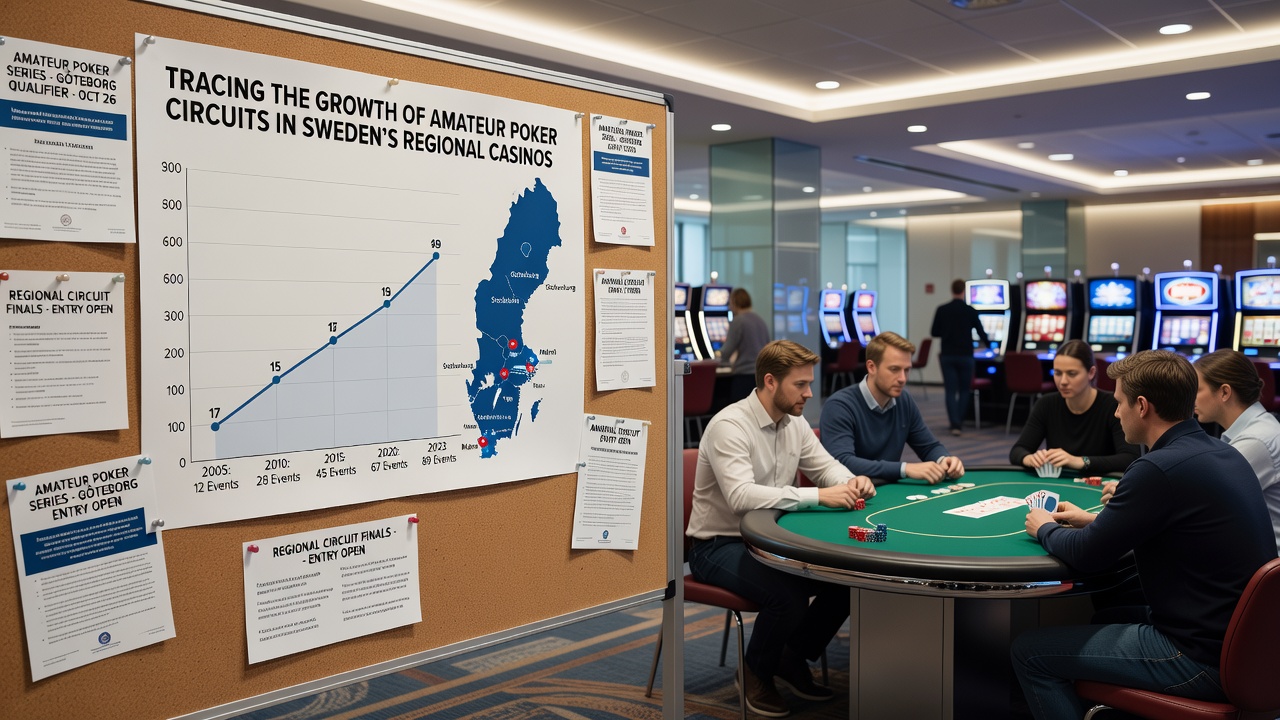
Tracing the Growth of Amateur Poker Circuits in Sweden's Regional Casinos
Amateur poker circuits have expanded steadily across Sweden's regional casinos over the past decade, with operators in cities like Gothenburg, Malmö, and Sundsvall reporting consistent increases in participation numbers. These circuits connect smaller venues through scheduled tournament series that allow players to accumulate points toward regional finals, and data from the Swedish Gambling Authority shows live poker entries rising each year since 2019. Observers note that regional casinos now host weekly low-stakes events alongside monthly circuit stops, creating pathways for local enthusiasts to progress without traveling to major urban centers.
Expansion of Tournament Structures
Regional casinos began formalizing amateur circuits around 2018 when Casino Cosmopol locations introduced interconnected leaderboards that tracked results across multiple sites. By 2023 the number of participating venues had doubled, and figures reveal that average monthly tournament attendance at these locations reached 1,200 players. Circuit formats typically feature buy-ins between 500 and 2,000 SEK, with structures that emphasize skill progression through satellite qualifiers leading into larger monthly finals. In August 2026 several circuits plan to launch additional stops in Karlstad and Örebro, extending the network further into central Sweden while maintaining the same point-based qualification system already in use.
Role of Local Player Communities
Local player groups have driven much of the circuit growth by organizing informal meetups that feed directly into official casino events. These communities maintain online forums where participants discuss hand histories and share travel arrangements between regional stops, and researchers at Stockholm University documented a 35 percent rise in registered amateur players between 2021 and 2025. Casinos support these groups through dedicated player lounges and discounted entry packages for circuit regulars, which in turn sustains consistent turnout even during off-peak months. One study released by the European Gaming and Betting Association highlighted how such community integration has helped regional venues maintain steady revenue streams from amateur events despite broader industry fluctuations.
Venues have adapted floor plans to accommodate growing fields, converting adjacent restaurant spaces into temporary poker areas during peak circuit weekends. This practical adjustment allows events to scale from 60 to over 200 entrants without major construction, and operators report that the approach has reduced wait times while preserving the social atmosphere that distinguishes amateur play from high-stakes professional tournaments.
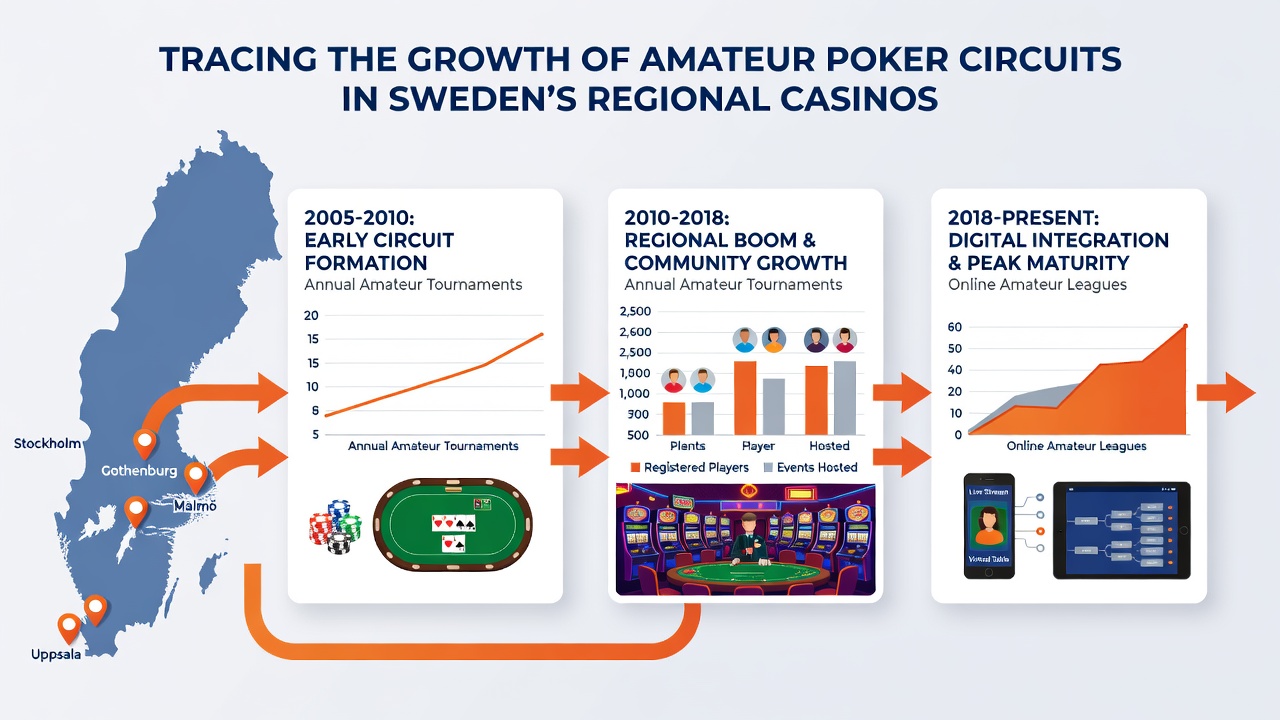
Regulatory Environment and Venue Support
Sweden's licensing framework requires regional casinos to allocate a portion of gaming space to live table games, which has encouraged operators to prioritize poker circuits as a compliant way to meet these obligations. The Swedish Gambling Authority tracks these activities through mandatory reporting, and the resulting statistics indicate that live poker now accounts for 12 percent of total table game revenue at regional sites. Venues receive guidance on responsible gaming measures specific to tournament play, including session time limits and player education sessions that run alongside circuit events. Such measures have allowed circuits to expand while remaining aligned with national standards for player protection.
Future Circuit Developments
Looking ahead, several regional operators have announced plans to introduce mixed-format events that combine traditional no-limit hold'em with short-deck variants popular among newer players. These additions aim to broaden appeal without altering the core amateur focus, and preliminary schedules for late 2026 already list cross-regional finals in Stockholm that will crown overall circuit champions. Data indicates continued investment in dealer training programs to handle larger fields, ensuring that event quality keeps pace with rising participation. Observers expect the network of regional stops to reach 15 venues by the end of 2027 if current growth patterns hold.
Conclusion
Amateur poker circuits in Sweden's regional casinos have developed from scattered local events into an organized network supported by consistent venue investment and community engagement. Statistics from regulatory bodies and academic sources confirm steady increases in participation and infrastructure, while August 2026 expansions signal further geographic reach. The circuits continue to operate within established licensing requirements, providing structured opportunities for players across multiple regions.